
A few projects we have been working on at UFORA.
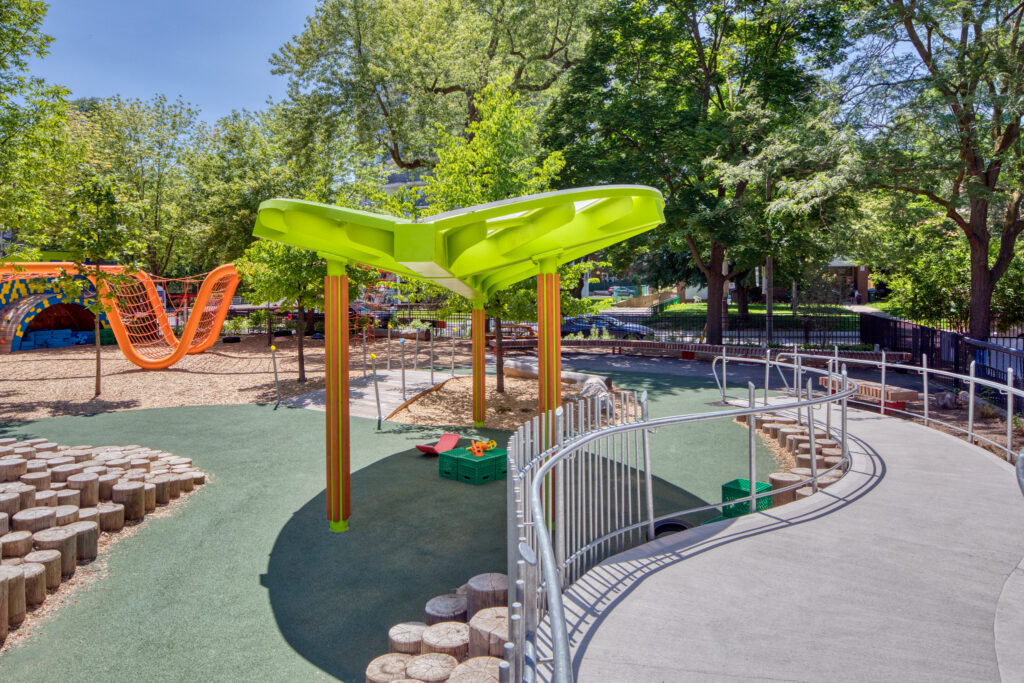
The playground design deliberately preserved existing trees from the original site, and these trees are notably integrated into the play experience.

When we began in 2004, the property was a dumping ground for yard debris. About 95 percent of the trees were Norway Maples and there was virtually no ground cover at all anywhere. The only native trees present were one large old White Oak and 2 dying Ash.
We started work on this Chine Drive property in 2016. We first cleaned out invasive species in the ravine and terraced the slope to reduce soil erosion and then worked on the front yard.
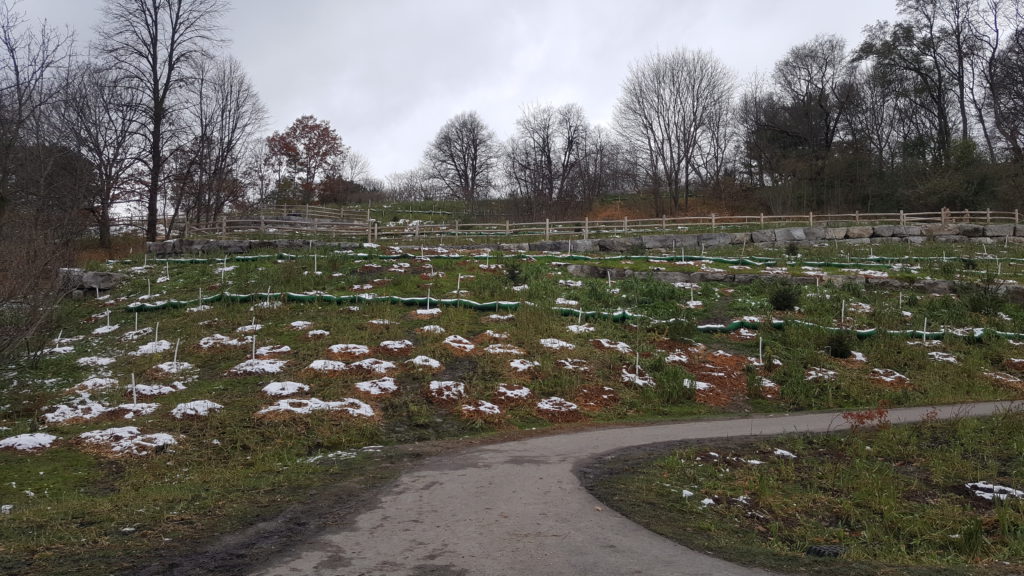
UFORA completed the planting on the Chorley Park switchback trail in November 2018 for the City of Toronto. We lined the new trail with native trees and shrubs that will do well in the new soils and abundant sunlight on the slope.
When we began the site was completely neglected and someone was living under the rear deck. We had to leave some invasive trees on the site or there would have been no tree canopy left.
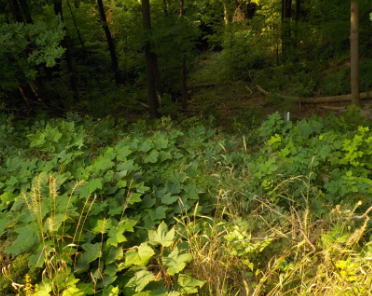
Don Valley/Sheppard Avenue West
Here are some before and after photos of our work at a ravine property on the West Don River valley in Toronto.
A new condominium building was being built on the top of a very steep slope overlooking the Humber River. The upper slope was eroding and the lower half was a sheer shale cliff. The slope was covered with invasive Manitoba Maple trees and vines.
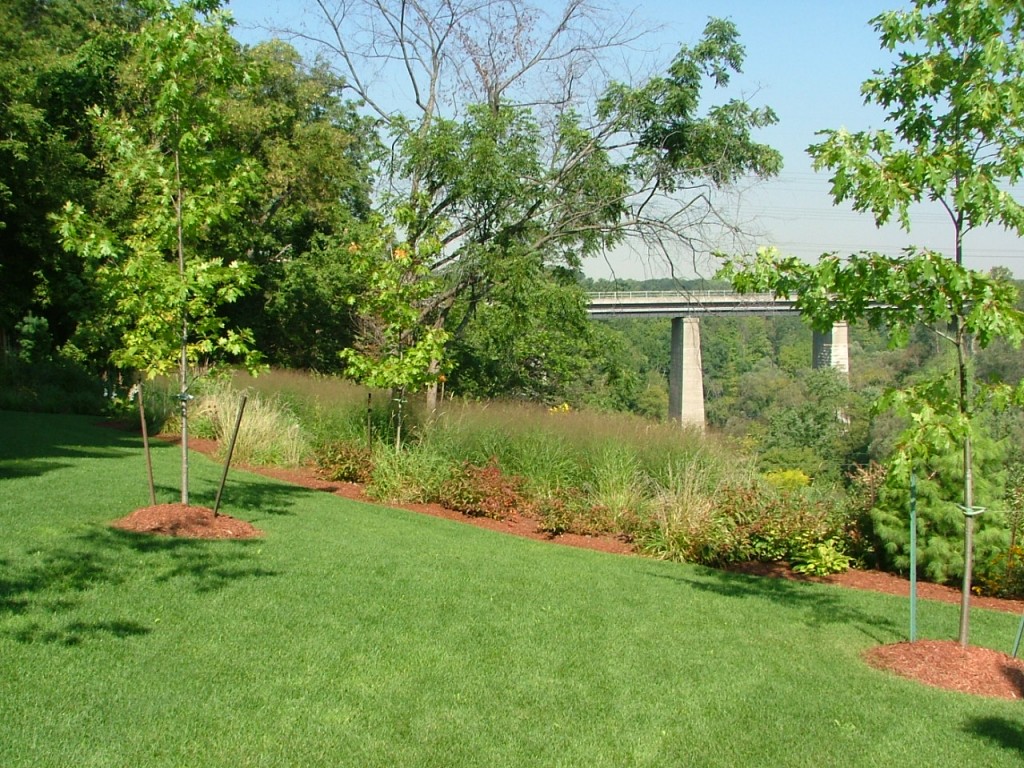
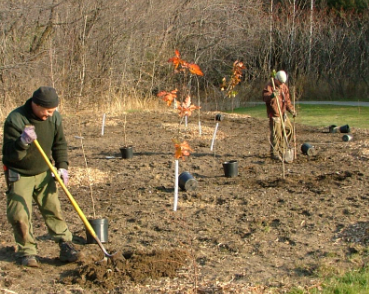
UFORA, working with partners has planted about 20 acres at Earl Bales Park over the years. It’s been a major project of ours.
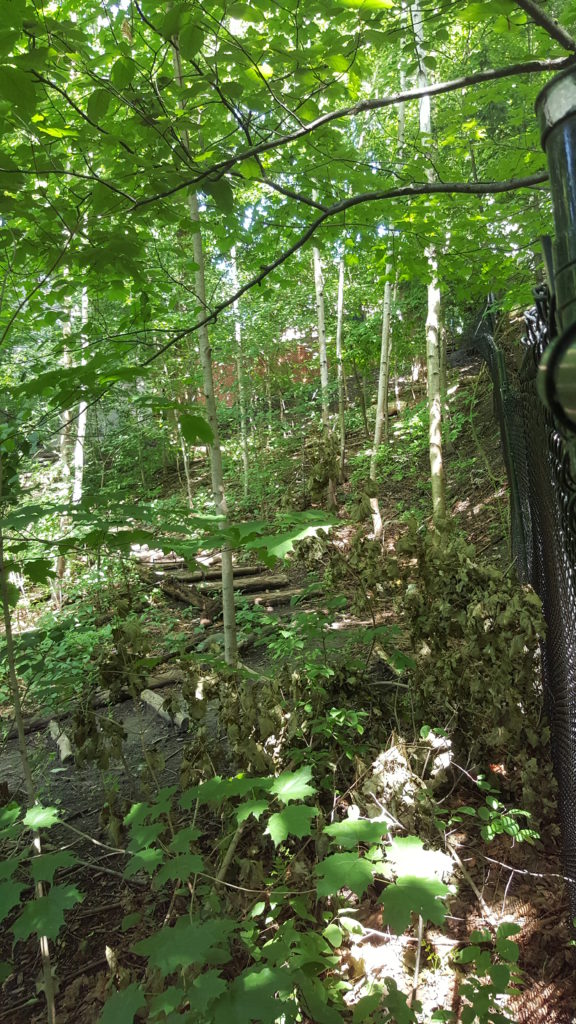
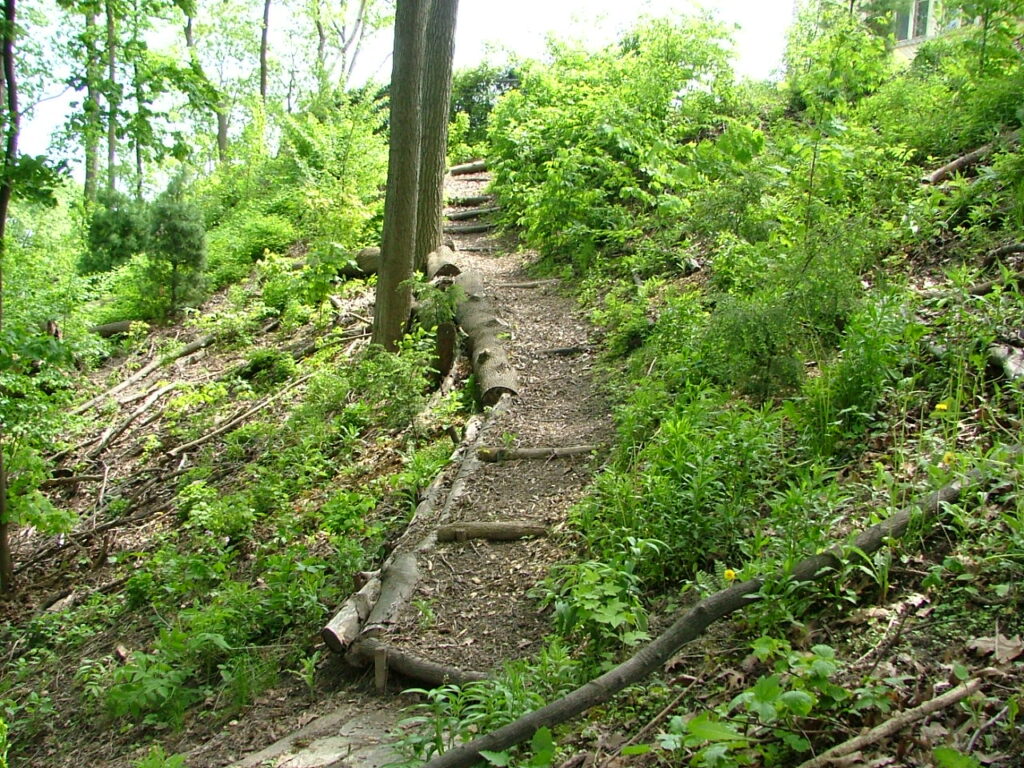
Here’s what it looked like after we cleared out the invasive trees, built a trail with the cut logs and planted new stock in 2008. Another view.
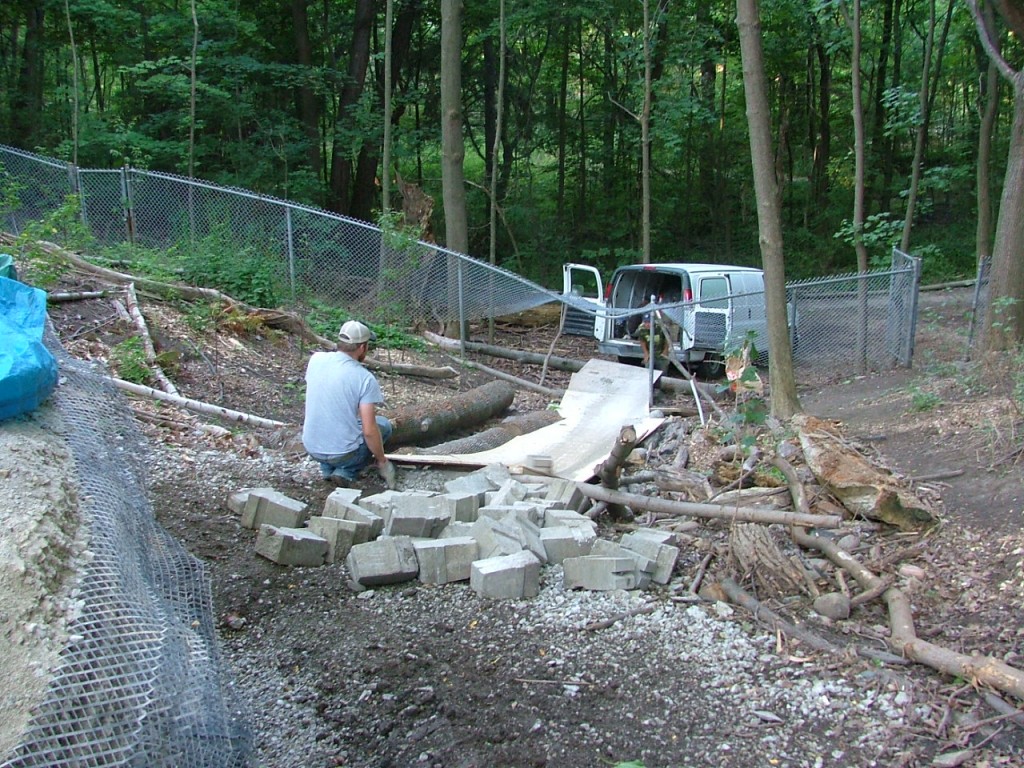
When we started the property was an abandoned garden with a large round concrete platform half-way down the slope. Much of the ground was bare.
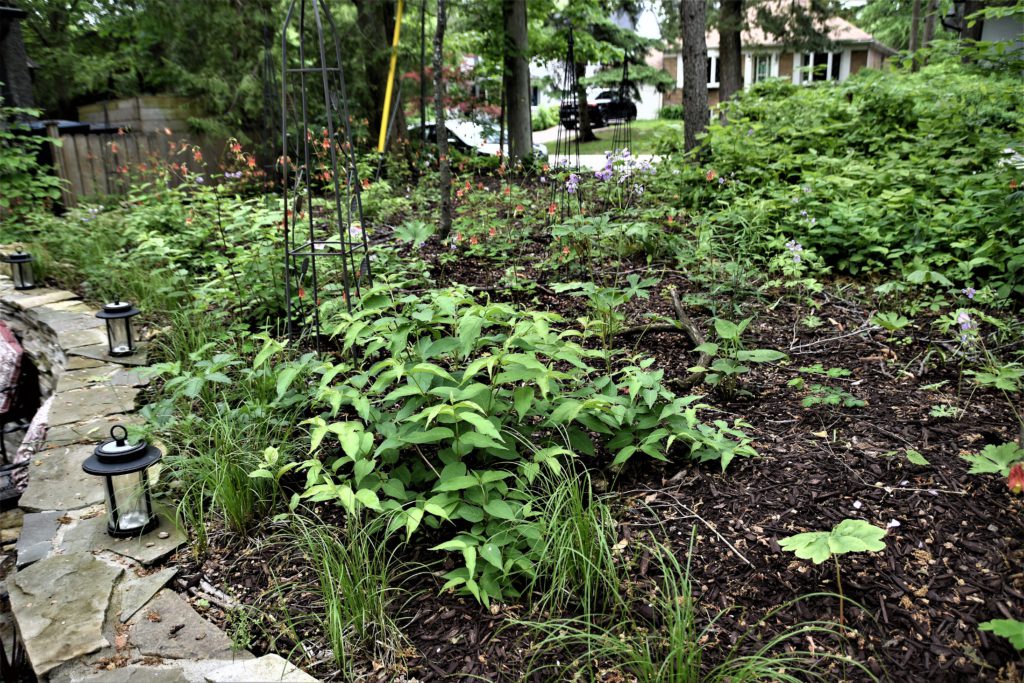
Our work at this home on Northridge Avenue, Toronto begun in the spring of 2017. The owner had the old concrete retaining wall that surrounded the whole front lawn taken away and the ground leveled, then added a layer of new sandy topsoil and had the driveway and walkways redone.
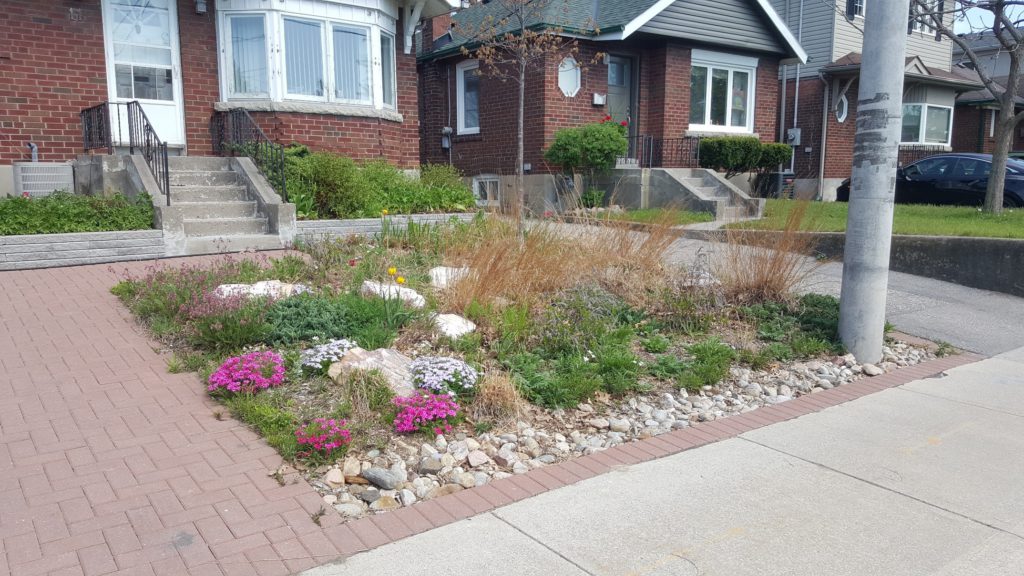
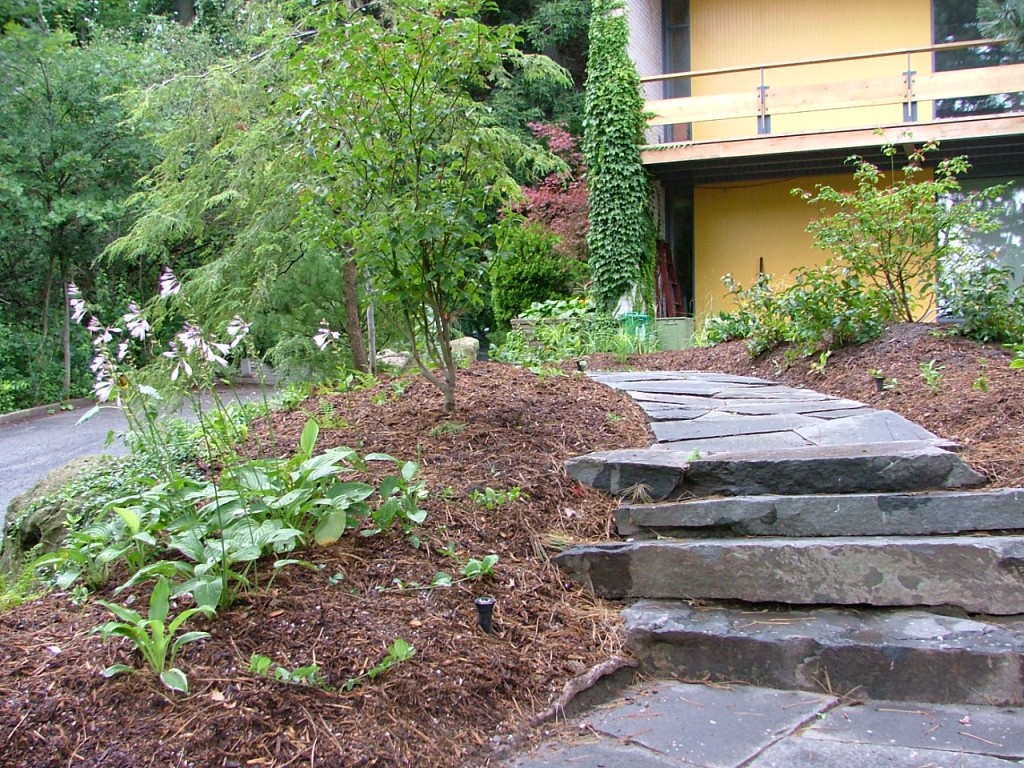
We removed the overgrown plants and pruned the trees. Plantings were added. Because there were 2 large pine trees, we modelled the new garden on a Muskoka plant community.
This is one of our oldest ravine restoration projects in Toronto’s Rosedale neighborhood. At the beginning of December 1997, the forest was dominated by Norway Maples growing on heavy clay soils with very little ground cover vegetation.
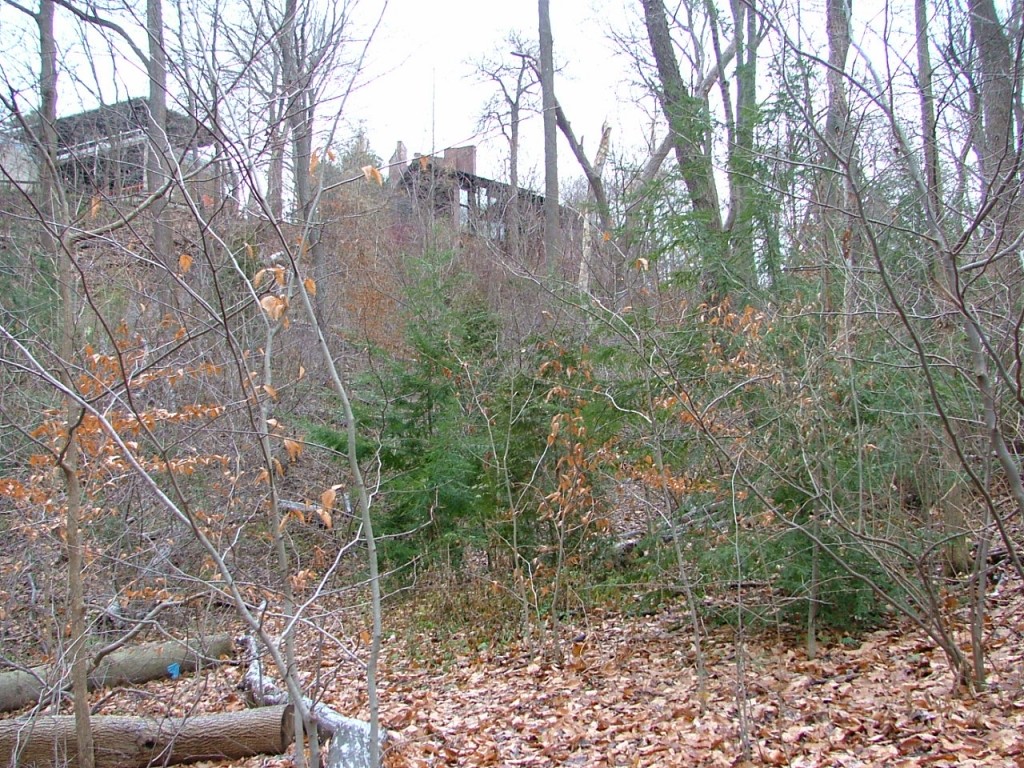
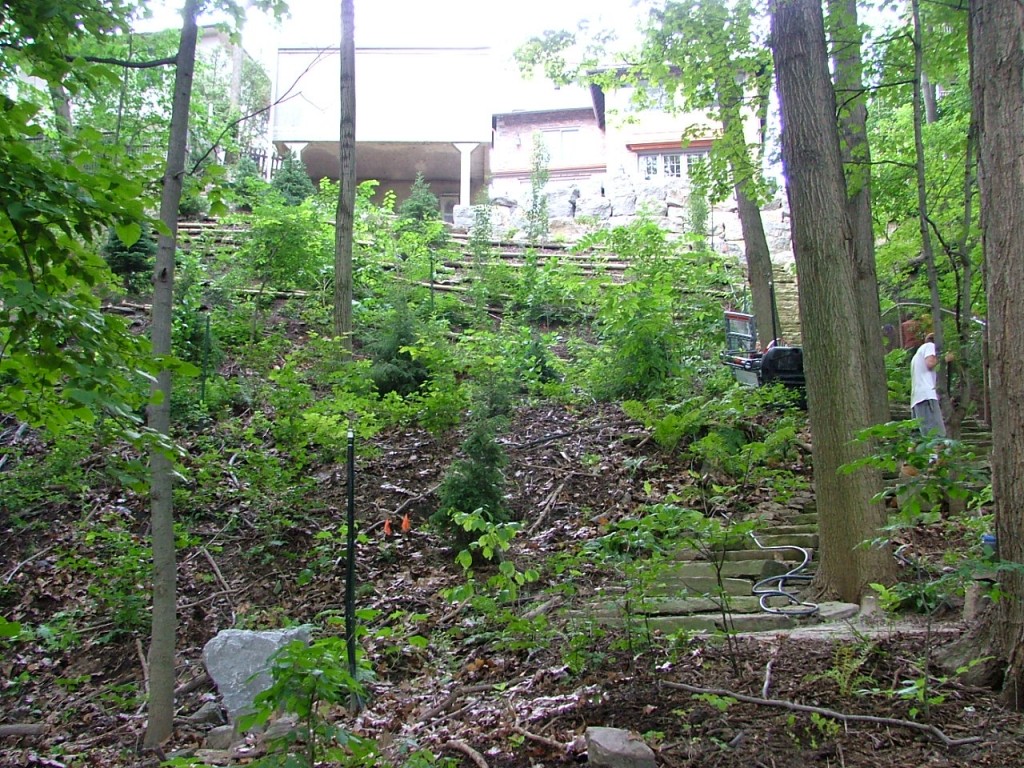
Just after construction in 2006. A barren, steep slope on clay fill soil. There’s mature forest at the bottom. Construction crews cut the roots of the tree at left, and it fell over within an hour.